

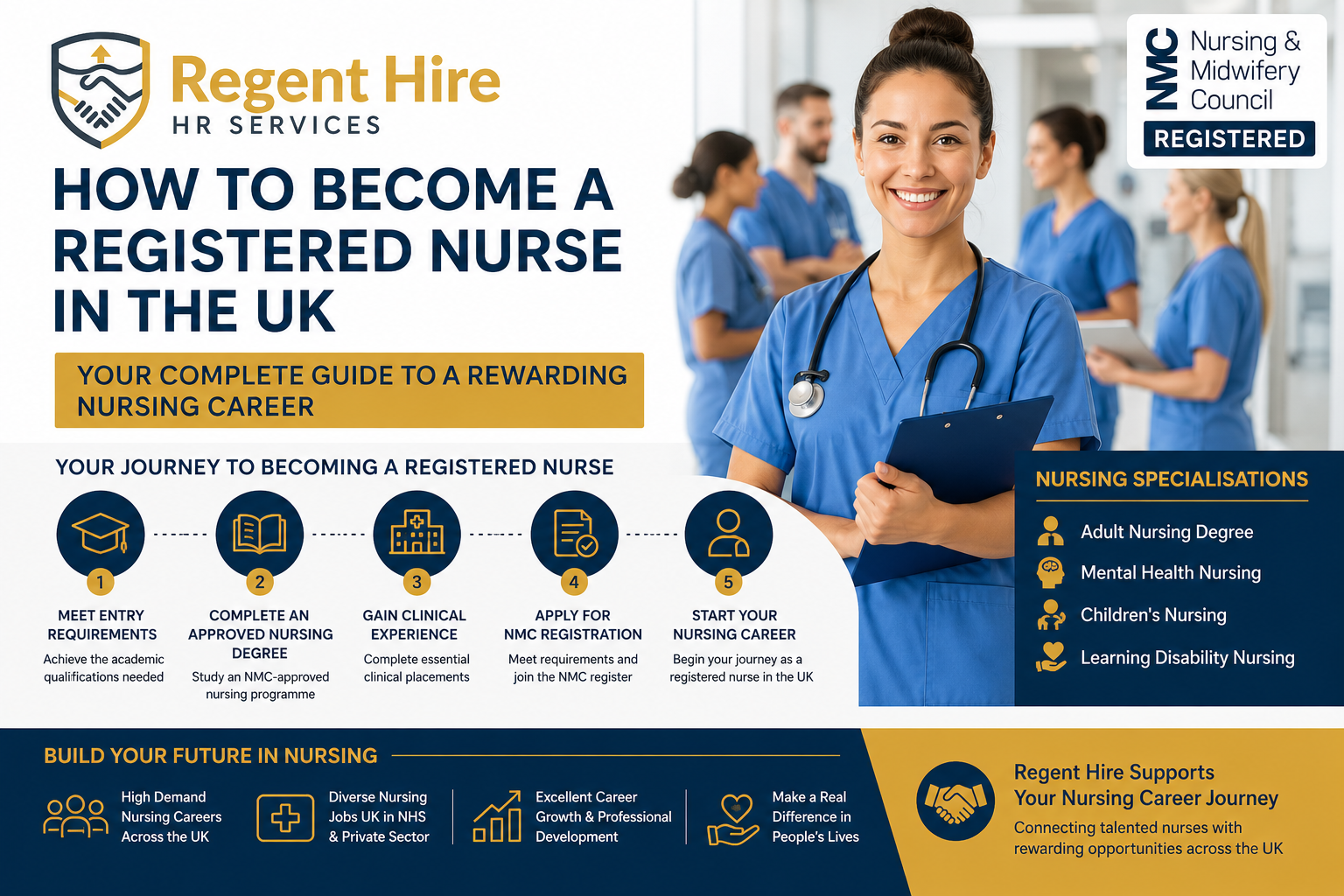


A Complete Career Guide by Regent Hire
Nursing is one of the most respected and essential professions within the healthcare sector. Nurses play a critical role in patient care, working across hospitals, clinics, community services, care homes, and specialist healthcare environments. As healthcare demands continue to grow across the United Kingdom, the need for qualified nurses remains high, making nursing an attractive career path for individuals who want to make a meaningful difference in people's lives.
For many aspiring healthcare professionals, understanding How to Become a Registered Nurse in the UK is the first step toward building a rewarding and stable career. Becoming a registered nurse requires education, clinical training, professional registration, and a commitment to lifelong learning. As healthcare services continue to evolve, nursing remains one of the most secure and rewarding career options available.
At Regent Hire, we recognize the growing demand for skilled nursing professionals and the important role they play in supporting patient care throughout the UK healthcare system.
Why Nursing Remains One of the Most Important Healthcare Careers
The healthcare sector relies heavily on nurses to deliver safe, effective, and compassionate care. Nurses are often the healthcare professionals who spend the most time with patients, helping manage treatments, monitor recovery, and provide emotional support.
The demand for Registered Nurse UK professionals continues to increase due to an ageing population, rising healthcare needs, and workforce shortages across many healthcare settings. This demand has created strong opportunities for individuals pursuing Nursing Careers UK.
A Profession Built on Patient Care
Nurses play a central role in supporting patients throughout their healthcare journey, from initial assessments to recovery and long-term care management.
Growing Career Opportunities
Healthcare providers across the NHS and private sector continue to recruit nurses across multiple specialties, creating a wide range of employment opportunities.
How to Become a Registered Nurse in the UK: Understanding the Basic Requirements
Anyone researching How to Become a Registered Nurse in the UK should first understand the educational and professional requirements involved.
To become a registered nurse, individuals must complete an approved nursing qualification and register with the Nursing and Midwifery Council (NMC). The NMC regulates the nursing profession and ensures nurses meet the professional standards required to practice safely within the UK.
Most aspiring nurses begin their journey by completing a university nursing degree that combines academic learning with practical clinical placements.
Academic Entry Requirements
Most universities require applicants to have relevant qualifications such as A-levels, BTEC qualifications, or equivalent educational credentials.
Essential Personal Qualities
Successful nurses typically demonstrate compassion, communication skills, resilience, teamwork, and a strong commitment to patient care.
The Different Nursing Specialisations Available in the UK
One of the most appealing aspects of nursing is the opportunity to specialize in different areas of healthcare. Students applying for nursing degrees usually choose a specific field of nursing before beginning their studies.
The four main nursing fields in the UK include:
- Adult Nursing
- Children's Nursing
- Learning Disability Nursing
- Mental Health Nursing
Each pathway offers unique career opportunities and allows nurses to focus on specific patient groups and healthcare needs.
Adult Nursing
An Adult Nursing Degree prepares students to care for adults with acute and chronic health conditions across various healthcare settings.
Mental Health Nursing
Mental Health Nursing focuses on supporting individuals experiencing mental health challenges and helping them achieve recovery and wellbeing.
How Regent Hire Highlights Opportunities in Nursing Careers UK
The nursing profession offers a variety of career pathways that extend beyond traditional hospital roles. Nurses can work within community healthcare services, mental health facilities, rehabilitation centres, educational institutions, and specialist healthcare environments.
Regent Hire recognizes the importance of promoting awareness of nursing career opportunities and the growing demand for qualified professionals throughout the healthcare sector.
Diverse Career Options
Qualified nurses can pursue careers across public healthcare organizations, private healthcare providers, and specialist clinical services.
Professional Growth Opportunities
Nursing provides numerous opportunities for career progression through additional qualifications, leadership roles, and specialist training.
Completing an Approved Nursing Degree
A university nursing degree is one of the most common routes into the profession. Nursing degree programs typically take three years to complete and combine classroom learning with practical clinical placements.
Students gain experience across multiple healthcare settings, allowing them to develop clinical skills and understand different aspects of patient care.
Clinical placements are an essential part of nursing education because they provide real-world experience under professional supervision.
Academic Learning
Students study anatomy, physiology, pharmacology, healthcare ethics, communication skills, and evidence-based practice.
Clinical Placements
Practical placements allow students to apply theoretical knowledge while working alongside experienced healthcare professionals.
NMC Registration and Why It Matters
After completing an approved nursing degree, graduates must apply for NMC Registration before they can legally practice as registered nurses within the UK.
The Nursing and Midwifery Council is responsible for regulating nurses and ensuring healthcare professionals meet professional standards. Registration demonstrates that a nurse has completed the required education and possesses the competencies necessary for safe practice.
Professional Accountability
Registered nurses must adhere to professional codes of conduct and maintain high standards of patient care.
Continuing Professional Development
Nurses are expected to continue developing their skills and knowledge throughout their careers.
How Regent Hire Recognizes the Demand for NHS Nursing Jobs
The NHS remains one of the largest employers of nurses in the UK. Growing patient demand and workforce shortages have created ongoing opportunities for qualified professionals across various nursing disciplines.
NHS Nursing Jobs are available in hospitals, community healthcare teams, specialist services, and mental health facilities. These positions provide opportunities for nurses to work within diverse healthcare environments while contributing to patient care and public health outcomes.
Opportunities Across Specialties
Nurses can work within emergency care, surgery, mental health services, community care, and many other clinical areas.
Career Stability
The demand for qualified nurses continues to provide strong job security and long-term career prospects.
Nursing Jobs UK Beyond the NHS
While many nurses choose NHS careers, significant opportunities also exist within private healthcare organizations. Private hospitals, specialist clinics, care providers, and rehabilitation centres all require qualified nursing professionals.
The demand for Nursing Jobs UK extends beyond traditional healthcare settings, creating diverse employment opportunities for newly qualified and experienced nurses alike.
Private Healthcare Careers
Private healthcare providers often seek nurses with specialist expertise and clinical experience.
Community-Based Nursing Roles
Community healthcare services continue to expand, increasing demand for nurses who provide care outside hospital environments.
How Regent Hire Supports Awareness of Nurse Recruitment UK Trends
Healthcare workforce shortages continue to influence recruitment activity throughout the UK. Many employers are actively seeking skilled nursing professionals to address staffing challenges and support service delivery.
Regent Hire follows developments within Nurse Recruitment UK and healthcare hiring trends to better understand workforce requirements across different healthcare sectors.
Addressing Workforce Shortages
Recruitment efforts continue to focus on attracting and retaining skilled nursing professionals.
Supporting Healthcare Workforce Growth
Strong recruitment strategies help healthcare organizations maintain workforce stability and patient care standards.
The Future of Nursing Careers in the United Kingdom
The future of nursing remains highly positive. Healthcare demand is expected to increase further as the population ages and healthcare services expand. New technologies, evolving healthcare models, and workforce planning initiatives will continue shaping the profession.
For individuals researching How to Become a Registered Nurse in the UK, the career outlook remains exceptionally strong. Qualified nurses will continue to play an essential role in delivering healthcare services across a variety of clinical settings.
Healthcare providers will continue investing in nursing talent, professional development, and workforce expansion to meet future healthcare needs.
Final Thoughts
Understanding How to Become a Registered Nurse in the UK is the first step toward entering one of the most rewarding professions in healthcare. From completing an Adult Nursing Degree and obtaining NMC Registration to exploring opportunities in NHS Nursing Jobs and wider Nursing Careers UK, the pathway offers both professional fulfilment and long-term career stability.
As healthcare demand continues to grow, qualified nurses will remain at the heart of patient care. By recognizing workforce trends, educational requirements, and career opportunities, Regent Hire continues to highlight the importance of nursing professionals within the UK healthcare system.